Happy February! I hope you're somewhere warm, safely away from the arctic chill outside. Before we're inundated with candy hearts and boxes of chocolate next week, let's take a deep dive into what you need to know about sugar. I'll keep it short and sweet (the pun is always intended), and I solemnly swear that this newsletter will not ruin your dessert. Let's get into it!
Let's start with the basics...
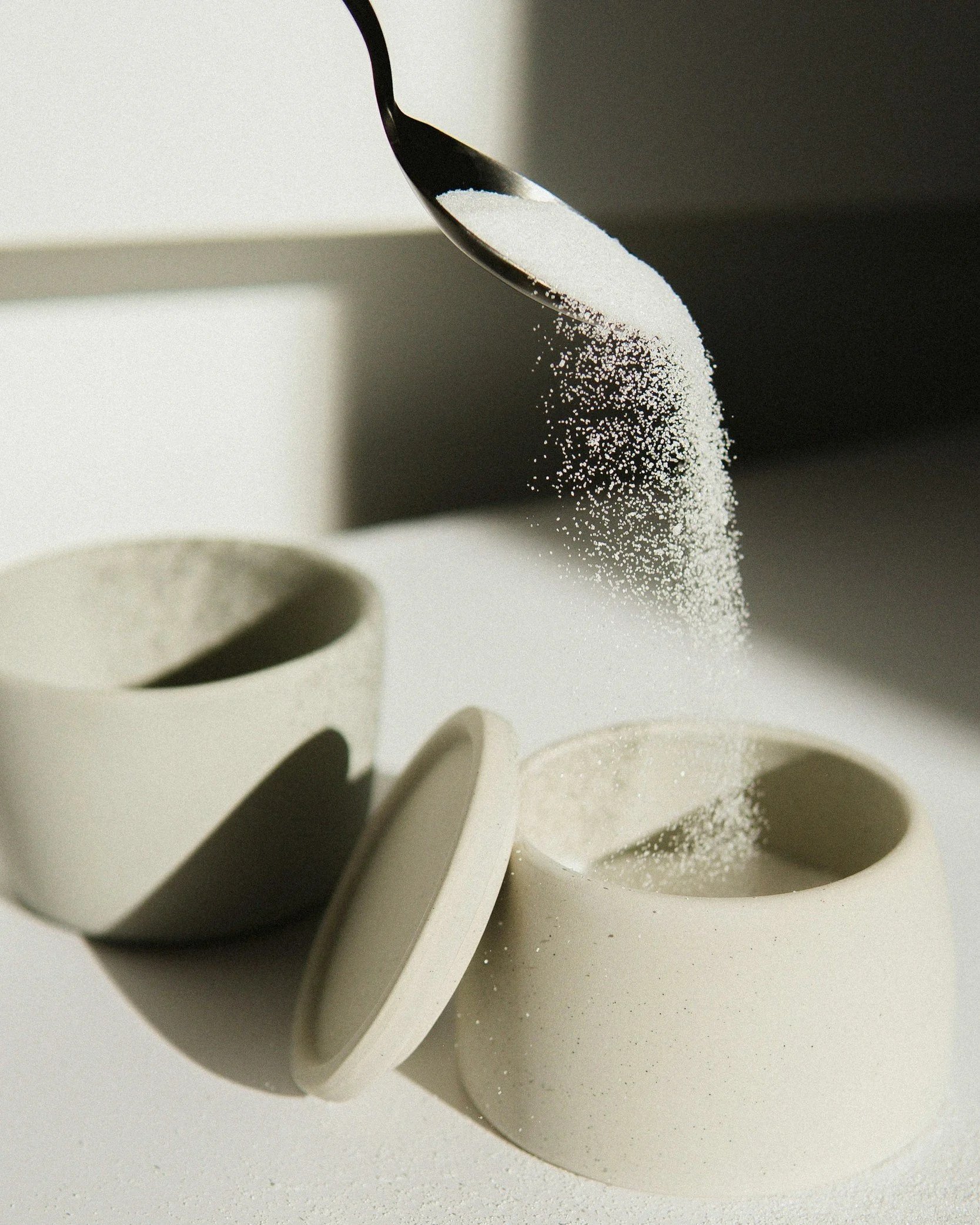
When we talk about sugar, there are two types to differentiate between. Some sugar in your diet occurs naturally from foods like fruit (fructose and glucose) or milk (lactose). Sugar can also be added, and it's this "added sugar" that we are going to be talking about.
Added sugars are sugars and syrups put into foods during preparation or processing, (or that you add in at the table).
Is sugar bad for you?
There actually isn't a clear-cut answer to this! Sugar is not harmful on its own and one component of it (glucose) is necessary for life. This being said, products with added sugar are often very palatable, making them much easier to overeat than less-processed, whole foods with naturally occurring sugar like fruit.
When you're deciding what to eat, the best strategy is to look for the most nutrient-dense option. Added sugars typically do not provide any additional nutrients. This means that foods with substantial amounts of added sugar often have low-nutrient density and a high calorie density, which can lead to weight gain.
It's true that eating patterns with high amounts of added sugar are also associated with a greater risk of heart disease, obesity, diabetes, and some forms of cancer. We can't determine that sugar is the cause, though, because people who consume large amounts of sugar also tend to have a variety of other unhealthy behaviors.
The bottom line is that sugar can be consumed in modest quantities with no real negative side effects, so it can be included in a healthy diet as long as it does not promote overeating.
How much added sugar is too much?
Current guidelines recommend consuming less than 10% of your calories per day from added sugars. The American Heart Association recommends even less - no more than 6% of calories each day. For most women, that’s no more than 100 calories per day, or about 6 teaspoons of sugar. For most men, it’s no more than 150 calories per day, or about 9 teaspoons.
Sugar has a way of sneaking in...
Added sugars might be sneaking into your diet without you realizing! For example, bread, pasta sauce, salsa, flavored yogurt, and salad dressing all contain some form of added sugar, though they may not be products you think of as being sweetened.
Take a look at the Nutrition Facts panel of your favorite products and look for “Added Sugars” listed under “Total Sugars.” Keep in mind that there are four calories in one gram of sugar. This means if a product has 15 grams of sugar per serving, that’s 60 calories just coming from sugar alone.
If there is no Nutrition Facts panel, look at the list of ingredients. Sugar has many other names. Besides those ending in “-ose,” such as maltose or sucrose, other names for sugar include high fructose corn syrup, molasses, cane sugar, corn sweetener, raw sugar, syrup, honey or fruit juice concentrates.

Try this! Take a look at 10 different food items, either in your home or at the grocery store, and try to identify how much added sugar the products contain. Do any of them surprise you?
Should you ban sugar from your diet?
The good news is that banning sugar is unnecessary and not something that needs to be on your 2026 To-Do list. What may need to be on your radar are the practical ways you can reduce your consumption of added sugars. Going cold turkey will most likely not be a successful strategy. Instead, try this:
Skip prepackaged foods in favor of whole foods like fresh fruits, vegetables, seeds, and nuts. When you do buy ready-made products, take a look at the nutrition labels and note the added sugars.
Rethink your drink: slowly reduce your intake of sodas and sports drinks and switch to water instead. Carry a re-fillable water bottle, try seltzer if you need bubbles, or toss slices of fruit into your water for flavor. When in need of something sweet, sip a homemade smoothie. Instead of a Frappuccino, regular coffee with a couple squares of dark chocolate to go with it might just do the trick.
Cook smarter: Use extracts and spices like vanilla and cinnamon instead of sugar. You can also try swapping the sugar in your recipe for unsweetened apple sauce.
Have patience with yourself! If you've been exposed to sweetened foods and beverages for years, it may take time to retrain your palate to enjoy the flavors and sweetness of natural foods.

Hi, I'm Cassandra! I'm a Certified Personal Trainer, Nutritionist, and Pre/Postnatal Fitness Specialist based in New York City where I've also been performing in theatre and film since 2015. I began studying with the National Academy of Sports Medicine so that I could help battle the harmful effects of diet culture and body shaming I was seeing online by spreading evidence-based information that will help you lead a more balanced, healthy, and mobile life!